

Install Permeable Pavers for a Beautiful, Functional Yard
Central Pennsylvania's Trusted Outdoor Living Company

When a driveway collects standing water after rainfall, directs runoff toward your home’s foundation, or leads to a municipal stormwater notice, it points to a clear drainage issue. Permeable pavers let water pass through the joints into a stone base below instead of running off across the yard or into the street.
A Plus Landscaping has worked as permeable driveway installers across Central PA since 2006, handling design and construction for homeowners in Lancaster, Harrisburg, Hershey, and Mechanicsburg searching for permeable pavers near me. This eco-friendly driveway is the option A Plus builds when standard drainage isn’t holding up.
How Permeable Pavers Work
Permeable pavers look like standard pavers on the surface, but the joints and the base underneath are built to let water through instead of shedding it. Rain moves through the paver joints, filters down through a layered stone base, and either soaks into the soil or drains away slowly instead of sheeting across the driveway.
That matters in Central PA, where heavy spring rain and quick snowmelt can send more water across a property at once than a standard driveway is built to handle. The result is less runoff hitting the street and less water pooling near the house. The base beneath the surface does the actual work, and how much it helps depends on how the property already handles water.
Where the Water Goes
Underneath the pavers, a layered base of open-graded stone holds the water temporarily and lets it drain at a controlled rate. The layers run from a fine bedding stone near the surface, through a coarser base stone in the middle, to larger storage stone at the bottom.
Standard surfaces are designed to move water off as fast as possible, and permeable systems are designed to hold and release it gradually. That’s a difference in how the driveway is engineered, not just what it’s made of.
The exact depth and stone sizing depend on the soil and drainage needs of the property. Getting that sizing right is what keeps a permeable driveway performing years after installation instead of clogging or ponding the way an undersized base eventually would. Soil type varies enough across Central PA that the same base design rarely works on two different lots.
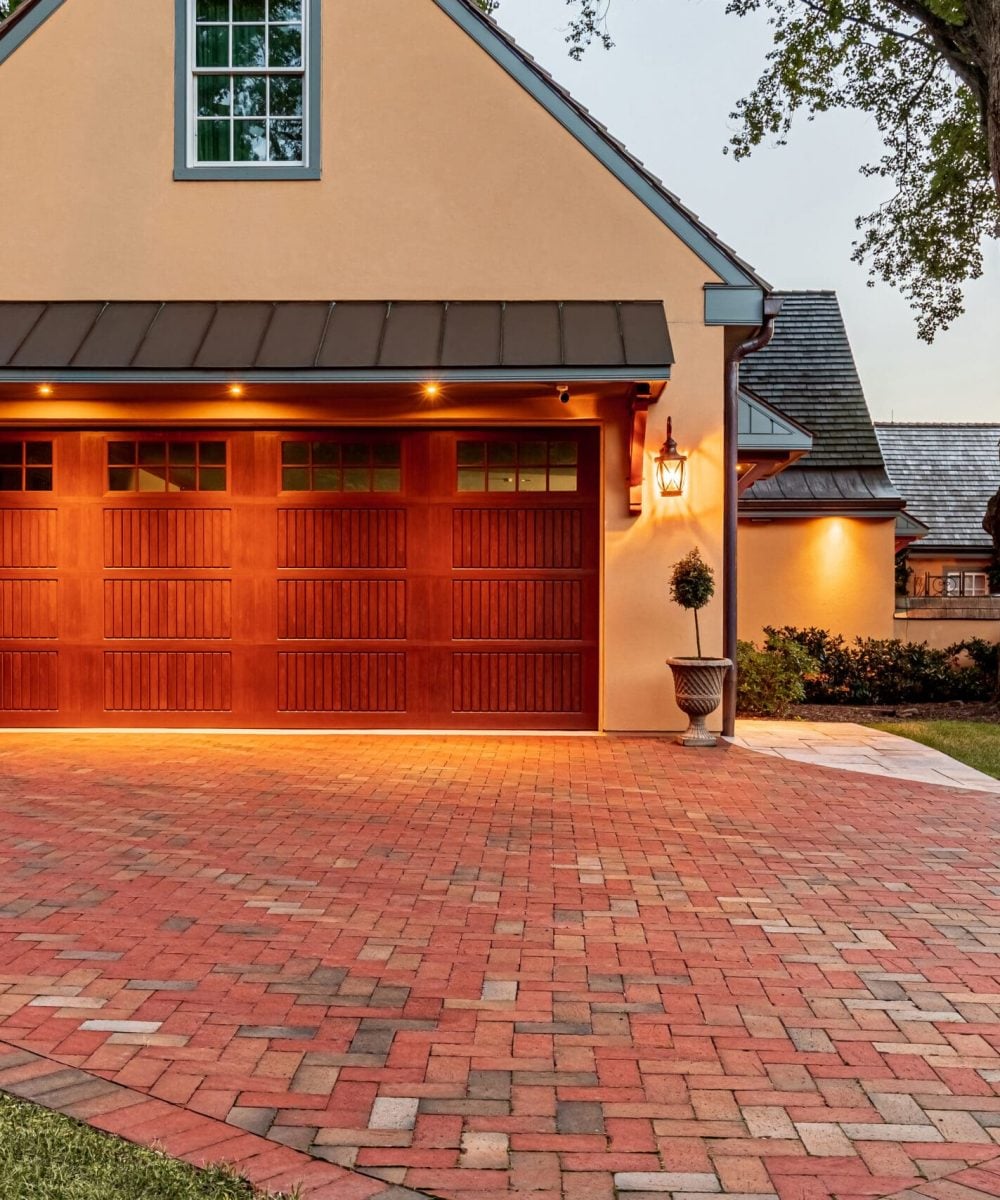
Where Permeable Pavers Make the Biggest Difference
Permeable pavers earn their keep on properties where standard drainage is already a fight. The situations below are where the difference in performance is easiest to see, but the same principle can apply on any property where water tends to collect faster than the ground absorbs it. None of these rule out a standard driveway; they just make the case for a permeable one stronger.
- Sloped Lots: Runoff picks up speed and volume before it reaches the street.
- Low Spots: Water already tends to collect near a house, garage, or patio.
- Stormwater Requirements: Township or HOA rules tied to new construction or a hardscape addition.
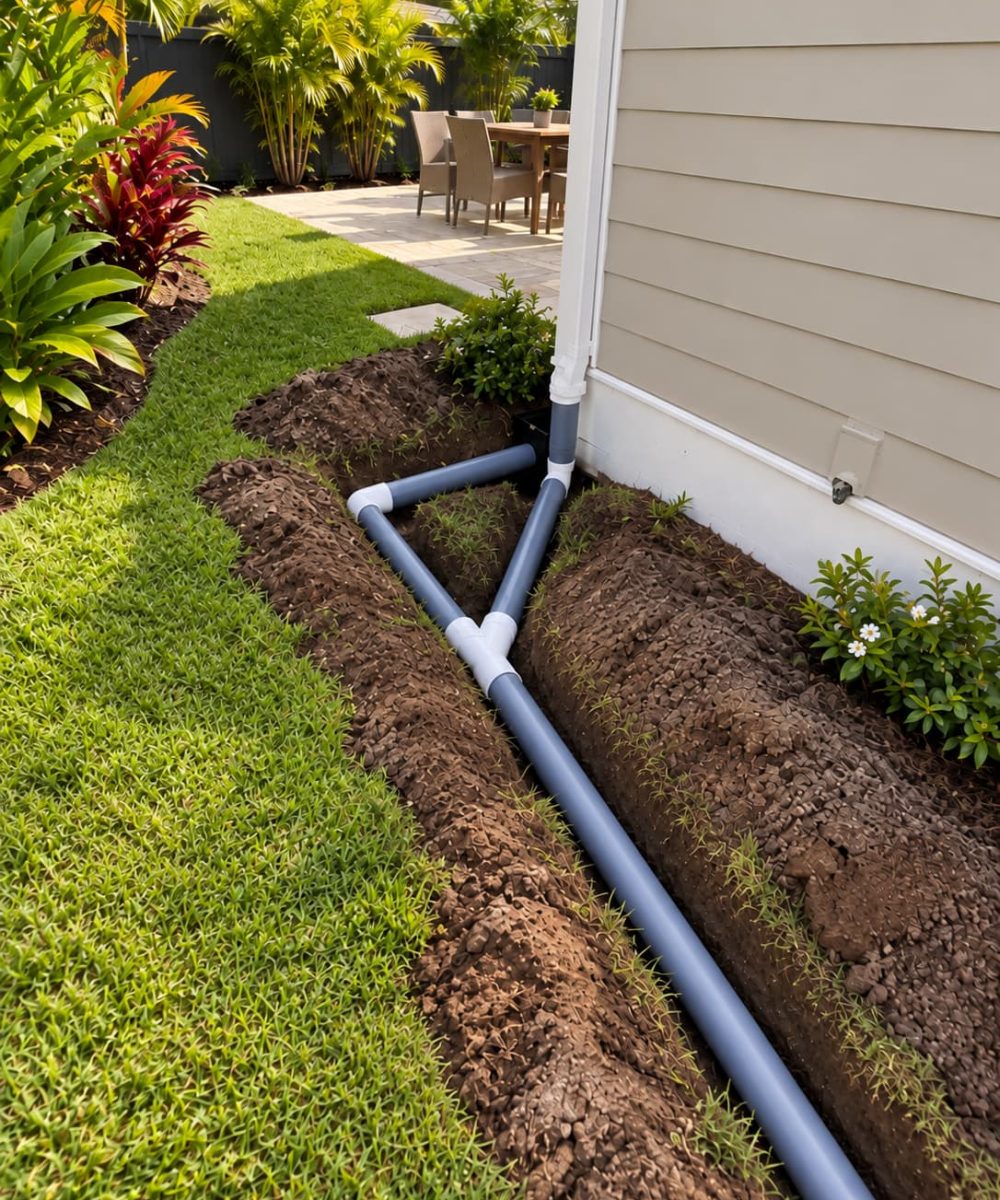
- Downspout Runoff: A grade change or downspout already sends water toward the driveway.
Recent Eco-Friendly Permeable Paver Projects
A permeable driveway is part of the same design as the rest of the yard. When we plan one, we’re accounting for how water moves across the whole property, from the roofline to the street, not just the slab under the car.
That often means looking at gutters, grading, and any existing drainage features already on the property before deciding how the new base should be built. Materials are chosen based on drainage need and how the driveway pairs with the house, not picked off a fixed order form. How the project connects to the rest of the yard matters just as much as the base underneath.
Drainage planning like this isn’t necessary for every property.
A permeable driveway is often planned alongside a full outdoor living project rather than installed in isolation, and if drainage isn’t the main concern for your property, a standard paver driveway is usually the simpler choice.
Especially useful for:
- New driveway construction where drainage planning happens before the base goes in
- Driveway replacements on properties with a known runoff or pooling problem
- Projects paired with a retaining wall or grade change, where water management is already part of the plan
- Properties working toward a township stormwater requirement
One Contractor, Start to Finish
The same team that designs the drainage plan builds the driveway. That means a single point of contact for the entire project, from the first site visit to the finished install.
How We Work
Every permeable driveway starts with figuring out where the water actually goes, then moves through design, certified installation, and financing if you need it.
1. Call or send a message online.
Our client experience comes first! From day one, our team will listen, guide, and deliver with care. We promise to treat your home like it’s our own and focus on your goals, style and needs throughout the process.
2. We walk the property with you.
That includes the slope, the low spots, and how water currently moves across the yard, not just where the driveway will sit. We look at where downspouts empty, where water pools after a storm, and how the grade slopes toward the street or a neighboring property.
3. We build a custom design around what your property needs.
For larger projects, we produce full 3D renderings before anyone breaks ground, so you can see the plan before construction starts. The design accounts for the base depth, drainage layout, and grading specific to your lot rather than a standard specification.
4. Certified installers build the driveway.
The same team that designed the drainage plan installs it.
5. Financing through HFS Financial is available
For buyers who want flexibility on how the project is paid for.
Why A Plus
Nearly twenty years in this business have taught A Plus Landscaping how water and frost actually behave on Central PA properties, and the company has stayed family-owned the whole time.
Built for Central PA Soil, Grades, and Winters
As permeable driveway installers working in Central PA soil, grades, and winters for nearly twenty years, we’ve seen what a generic install spec misses. A permeable driveway’s base has to be built for how water and frost actually behave on your specific property, which is why the site visit comes before any design is finalized rather than after. That’s the difference between a permeable driveway that performs through one winter and one that performs through twenty.

Family-Owned Since 2006
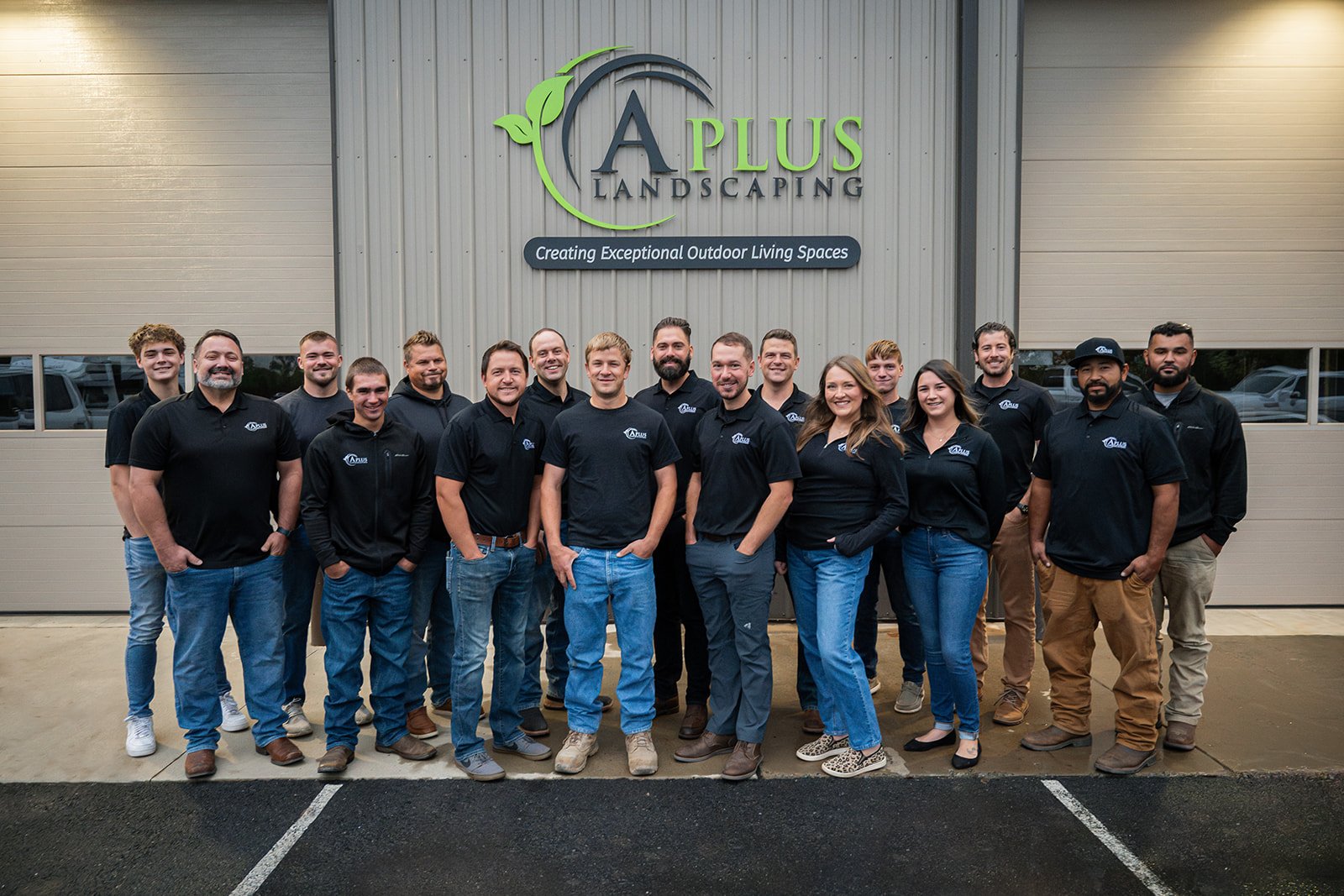
Marcus Waldner founded A Plus Landscaping in 2006, and the company has stayed family-owned since, with certified installers on every project. Central PA towns we serve include Lancaster, Harrisburg, Hershey, Mechanicsburg, Middletown, Reading, and nearby communities. The same team designing the drainage plan is the one building it, without a subcontractor in between.
Start Your Permeable
Driveway Project
If your driveway is sending water somewhere it shouldn’t, or your property has a drainage requirement to meet, that’s where we start the conversation. From there, a site visit shows exactly where the water is going and what the base underneath needs to handle it.
Frequently Asked Questions About Permeable Paver Driveways
Do permeable pavers actually stop water runoff?
Yes. Permeable pavers let water pass through the surface and into a stone base instead of running off across the driveway or yard. They don’t eliminate every drop of runoff on a property, but they significantly reduce the volume and speed of water leaving a paved surface.
What goes underneath a permeable paver driveway?
A layered stone base sits beneath the pavers, built to hold water temporarily and release it into the soil at a controlled rate. Depth and stone sizing are engineered for the property’s soil, slope, and drainage needs, not applied as a fixed spec.
Do permeable pavers need sealing?
Generally, no. Standard paver sealers reduce surface porosity, which works against the reason permeable pavers are installed in the first place. Porosity-preserving sealers exist for special cases, but sealing isn’t part of a standard permeable paver installation.
How much does a permeable driveway cost in Central PA?
The base and drainage work usually drive cost more than the surface material does, along with the size of the driveway and the site conditions. A Plus Landscaping provides a detailed proposal after an on-site consultation, which can include any connected landscaping scope. Financing is available through HFS Financial.
Will permeable pavers work on a sloped driveway?
Yes, with the right base design. A sloped lot changes how the drainage plan gets built underneath the pavers.
Are permeable pavers required by my township or HOA?
Some townships and HOAs require stormwater management for new construction or hardscape additions above a certain size. Whether that applies to your property depends on local requirements.
How long does a permeable paver driveway last?
A few things determine how long a permeable driveway lasts, mainly base preparation, drainage design, and the materials used. Those are the same factors that determine lifespan for any paver installation, and A Plus confirms each one for your specific property before the work starts.
Can permeable pavers handle Central PA winters and snow plowing?
Yes. Permeable systems resist freeze-thaw damage because water drains through the joints and base instead of pooling and freezing at the surface. Normal plowing is fine, but skip sand for traction since it can clog the joints, and clear de-icing salt once the ice is gone rather than letting it sit.


